Dumbledore Should Have Been the Villain
, 3 min read
Part two of my Harry Potter series, on the adults who fail the children in their care and why Dumbledore works better as the villain.
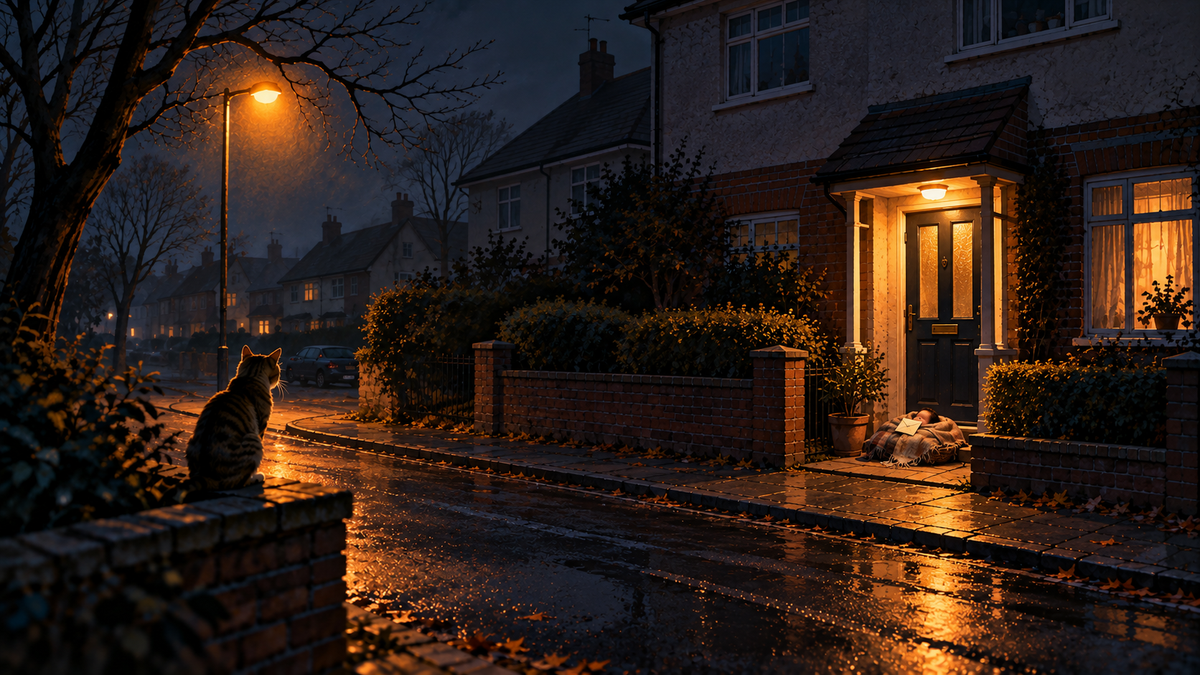
On the first day of the story, Professor McGonagall sits on a garden wall in Privet Drive and watches the Dursleys from morning till night. When Dumbledore arrives, she tells him he couldn't find two people less like them, and that he can't mean to leave the baby here. He leaves the baby with them. He sets the bundle on the doorstep, tucks a letter into the blankets and goes.
Fourteen years later, after Sirius dies, Dumbledore tells Harry that he knew he was condemning him to "ten dark and difficult years". He had his reasons, the protection of Lily's blood among them, and he decided they were worth what the boy would go through.
That's the Harry I wrote about in the first part, the boy in the cupboard who learned not to ask questions. When I reread the series in 2020, it was the adults around the children I couldn't stop seeing. Almost every grown-up who is supposed to protect them either fails them or uses them, and the one at the top does both.
The man with all the power
By the time Harry gets to Hogwarts, Dumbledore is headmaster, Chief Warlock of the Wizengamot and Supreme Mugwump of the International Confederation of Wizards. The titles are printed on Harry's acceptance letter. He is, by a distance, the most powerful man in that world.
Sirius Black spent twelve years in Azkaban without a trial. At the end of Prisoner of Azkaban, Harry and Hermione tell Dumbledore the truth, and he believes them. He also tells them that the word of two thirteen-year-old wizards will not convince anybody, and then he sends those same two children back in time to rescue Sirius themselves.
The usual defence is the one Dumbledore gives himself, that there is no proof once Pettigrew escapes and that he can't overrule the Minister. But he was Chief Warlock of the Wizengamot, the highest court in that world, and asking for a hearing overrules nobody. He had the standing to demand the trial Sirius never got, and he chose a Time-Turner and two children instead. Sirius spent the next two years on the run and then shut up in his family's house, and he died a wanted man.
The man he recruited
When Snape learns that Voldemort is going after the Potters, he asks him to spare Lily, and only Lily. Her husband and her baby are not part of the request. After she dies, Dumbledore reaches him through his grief. The boy has her eyes, he says, so help protect him. A guilty, grieving man becomes an asset, and the child becomes the thing that keeps him useful.
Fans call what Snape felt love. I don't. A man who loved her could not treat her son the way Snape treats Harry, and the cruelty isn't even saved for Harry. In Prisoner of Azkaban, when Neville faces a boggart, the thing a thirteen-year-old boy fears most in the world turns out to be his Potions teacher. Neville has nothing to do with Lily, so that one is all Snape.
Everything good Snape does, he does for a dead woman, and none of it is for the children in front of him. He is brave, he spends years as a double agent, and he is still not a decent man.
The two of them knew what they were doing. Late in the last book, in Snape's memories, he accuses Dumbledore of keeping Harry alive only so that he can die at the right moment, raised "like a pig for slaughter". Dumbledore doesn't deny it. The two adults most responsible for Harry's survival talk about him as an instrument, and each of them is right about the other.
The school
The institution around them works the same way. Dumbledore's welcome speech in Harry's first year tells the school that a third-floor corridor is out of bounds to anyone who doesn't want to die a very painful death, which is the surest way to send eleven-year-olds to look. When a troll gets into the castle at Halloween, the houses are sent back to their dormitories. Slytherin's is in the dungeons, which is where the troll had just been reported. In the second year, students are petrified one after another, and the school stays open for months while it waits for its mandrakes to grow.
Put together, they describe a place where the adults treat danger to children as part of the scenery.
Why he should have been the villain
If Dumbledore is good, the doorstep, the ten years, the Time-Turner and the boy raised to die on schedule are plot holes. If he's the villain, they are clues. Read that way, the series is a dark, coherent story about an orphan slowly working out that the kindest old man in his life was the one who left him in that house and kept him there.
The evidence for that book is all in the seven that exist. They just tell us it means something else.
The first letter Hogwarts ever sent Harry was addressed to the Cupboard under the Stairs. The school knew exactly where he slept.