The Physics of Coffee Brewing
, 3 min read
I grew up on coffee boiled in a pan. Then I watched Hiran treat an AeroPress like an engineering experiment.
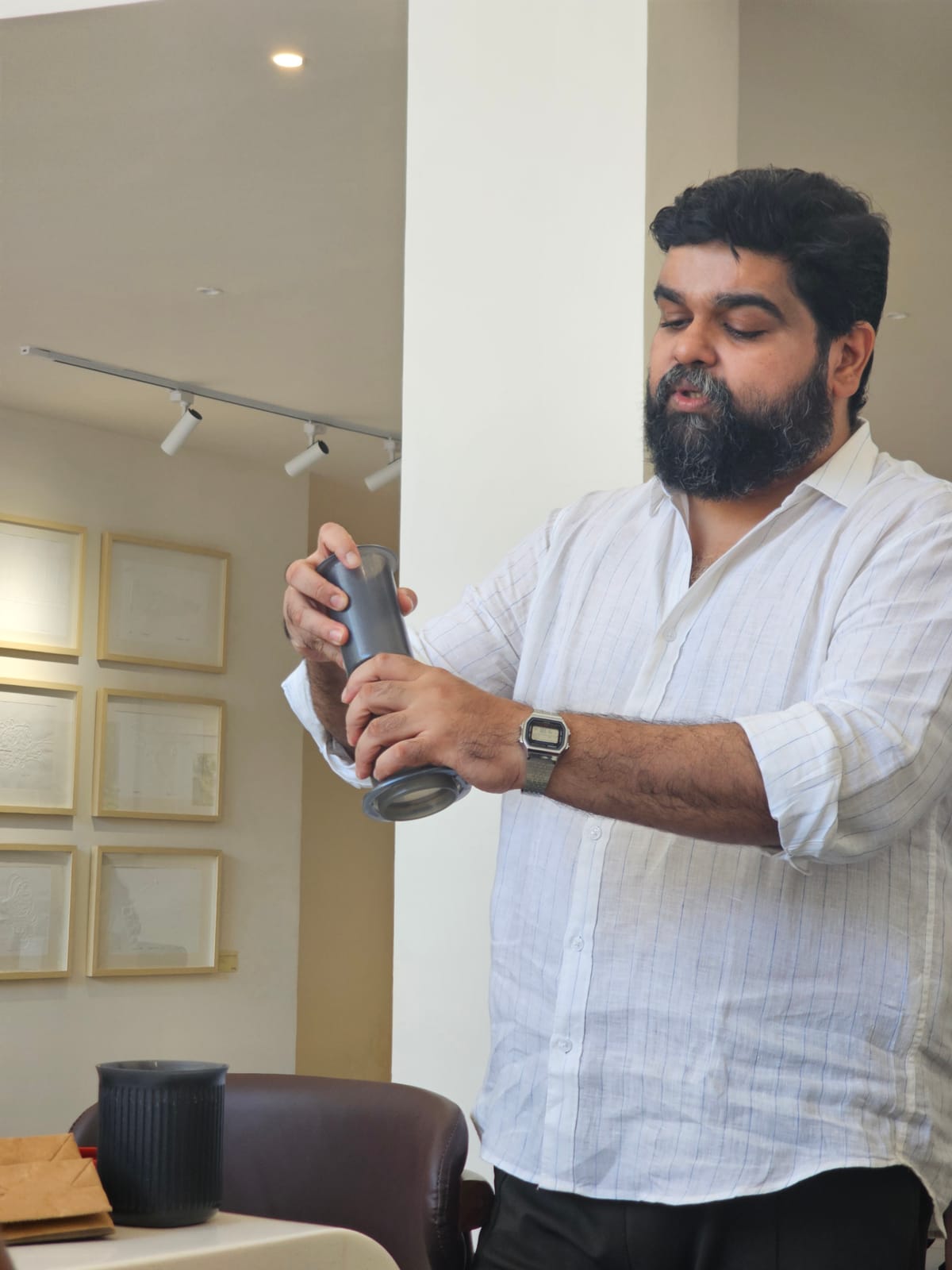
Watching Hiran Make Coffee
The coffee I grew up with was water and coffee powder boiled together in a pan, strained, and done. Everything I've learnt about coffee since has been a variation on that idea: get hot water to meet ground coffee, then get the grounds out of the way. A French press holds them back with a metal filter. A pour-over lets gravity pull the water through paper, and my drip machine does the same with a mesh and a paper filter. An espresso machine forces water through tightly packed grounds at around nine bars of pressure.
So when Hiran pulled out an AeroPress, my first question was where it fitted in all of this.
A syringe for coffee
The AeroPress was invented by Alan Adler, an engineer who taught at Stanford and had already made the Aerobie flying ring, and it shows. It's a large syringe. Water and grounds steep together in a chamber, a paper filter sits at the bottom, and a plunger pushes the coffee through. It borrows the steeping from a French press, the paper from a pour-over and a little pressure from whoever is doing the pressing. There's even a travel version, which says something about how attached people get to it.
Hiran likes it for the design, which surprised nobody. It's a simple object hiding a lot of complexity, and because every variable is exposed, it has a cult following trading recipes that differ in tiny, obsessive ways.
Every variable is a dial
Hiran treats every session as a small experiment. Grind size comes first, and he describes it by comparing it to table salt and sea salt, which is far more useful than any number. An AeroPress wants something between French press coarse and espresso fine, and getting it wrong can mean using twice the coffee for the same cup.
He brews at around 88.5°C and generally works in the high 80s to low 90s. Without a thermometer, he watches for the first set of bubbles as the water heats, which in his experience means it's at or just under 90. Then there's the ratio of coffee to water, and how long the two sit together before he presses. He changes one thing, tastes, and adjusts. Once the settings are right, the hundredth cup should taste like the first.
Upside down
The trick that won me over was flipping the whole thing. Used the normal way up, an AeroPress starts dripping the moment water goes in. Hiran builds it inverted, with the plunger at the bottom and the chamber facing up, so nothing escapes. A first splash of hot water lets the grounds bloom, releasing gas and swelling, and then the rest goes in. Only when he's ready does he fit the filter, flip it onto the cup and press. His kettle has a gooseneck spout, which looks like an affectation until he pours with it.
The small things
He rinses the paper filter first, so it sticks in place and the papery taste goes down the sink. Sometimes he stacks two for a cleaner cup, since each layer holds back more of the oils, and he reuses them a few times. Grinding dry beans builds up static that makes the grounds cling to everything, so he spritzes the beans with a drop of water first. Coffee people call this the Ross Droplet Technique, which is a very grand name for a spray bottle.
The coffee
The beans were from Black Baza, a Bengaluru roaster that buys from smallholder growers in Karnataka, Tamil Nadu and Kerala. The coffee grows under native shade trees without chemicals, growers are paid 1.2 to 1.4 times the market rate with guaranteed buy-backs, and the company won the Specialty Coffee Association's 2025 Sustainability Award in the for-profit category. Hiran was just as taken with how openly they talk about pricing, which is still rare in coffee. Every bag names the farm and the grower.
He had three of their coffees, each from a different place and roasted differently, with its own tasting notes on the bag. He pointed out that those notes describe what the roaster's taster found, and what ends up in my own cup, with my own grinder, water and hands, may not match. My drip machine and its much thinner filters are about to find out.